For most people, the Pacific Ocean is a place for fishing, surfing, boating, sunsets, and maybe taking a picture that makes everybody on social media jealous.
For U.S. Coast Guard search and rescue crews, however, the West Coast can become a very different place when the weather turns ugly.
From California’s powerful surf to the notoriously dangerous Columbia River Bar, Coast Guard personnel routinely train for situations where minutes matter, conditions deteriorate quickly, and rescuers themselves face serious risks. Recent official USCG search and rescue reports provide a sobering look at what Coasties can encounter while answering the call.
The Pacific Doesn’t Always Play Nice
The West Coast presents unique challenges for Coast Guard rescue operations. Strong Pacific swells, cold water, rip currents, breaking waves, fog, rocks, changing weather, and dangerous river bars can turn an ordinary outing into an emergency.
In July 2026, the Coast Guard warned Pacific Coast mariners and beachgoers about hazardous conditions stretching along the California coastline from Point Arena to Big Sur. Officials reported strong rip currents, sneaker waves, and breaking surf reaching as high as 10 feet in some locations. (US Coast Guard News)
For Coast Guard crews, these aren’t simply weather conditions to watch from a window.
They’re conditions they may have to enter.
Cape Disappointment Has Earned Its Reputation
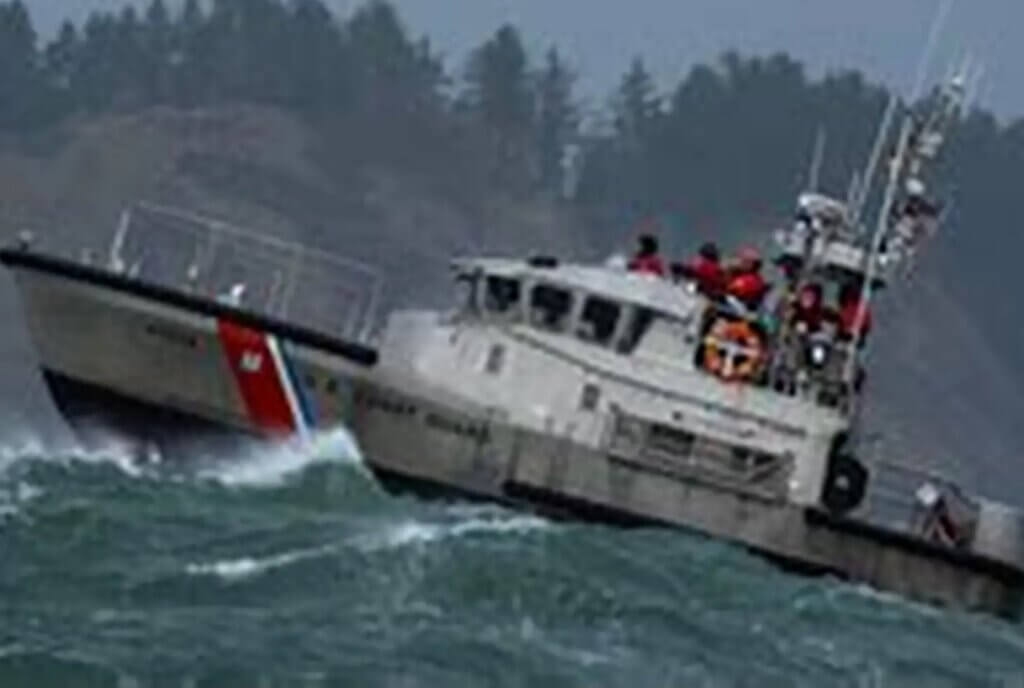
One of the most challenging areas on the West Coast is the entrance to the Columbia River at Cape Disappointment, Washington.
The Coast Guard describes the area as one of the most treacherous river bars in the world. The entrance has been associated with so many shipwrecks that it earned the nickname “The Graveyard of the Pacific.” (Pacific Area USCG)
During winter storms, wind-driven swells can reach 20 to 30 feet at the bar entrance. When powerful incoming ocean swells meet strong outgoing currents, enormous breaking surf can develop.
That combination creates a nightmare scenario for mariners.
And it creates an incredibly demanding environment for Coast Guard rescuers.
Coast Guard Station Cape Disappointment maintains five rescue boats, including three 47-foot motor lifeboats and two 29-foot response boats. The station conducts an average of 120 to 150 search-and-rescue cases each year. (Pacific Area USCG)
That’s a lot of calls.
When the Rescuers Need Rescuing
One of the realities of maritime emergencies is that people attempting to help can quickly become victims themselves.
A May 2025 Coast Guard case off Long Beach, Washington, demonstrates exactly how quickly a situation can escalate.
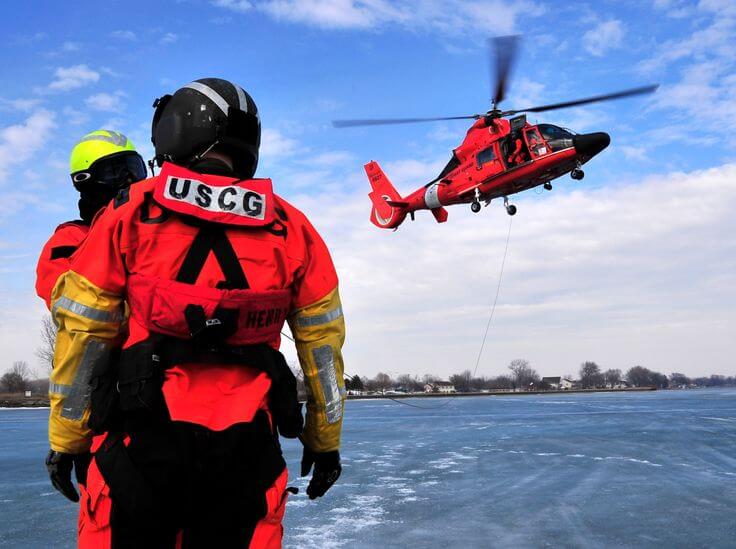
A 15-year-old boy was reported struggling in the water. Two members of his group attempted to reach him but needed rescue themselves. A Pacific County rescue swimmer aboard a jet ski rescued the two individuals. Meanwhile, Coast Guard crews launched a 47-foot motor lifeboat from Station Cape Disappointment and an MH-60 Jayhawk helicopter from Air Station Astoria. (US Coast Guard News)
The Coast Guard crews searched for more than five hours and covered more than 100 nautical miles.
The reported water temperature was approximately 54 degrees.
That’s cold enough to make a bad situation become dangerous very quickly.
It also illustrates why Coast Guard search and rescue training emphasizes preparation, teamwork, equipment, and decision-making.
A Search Can Cover Enormous Distances
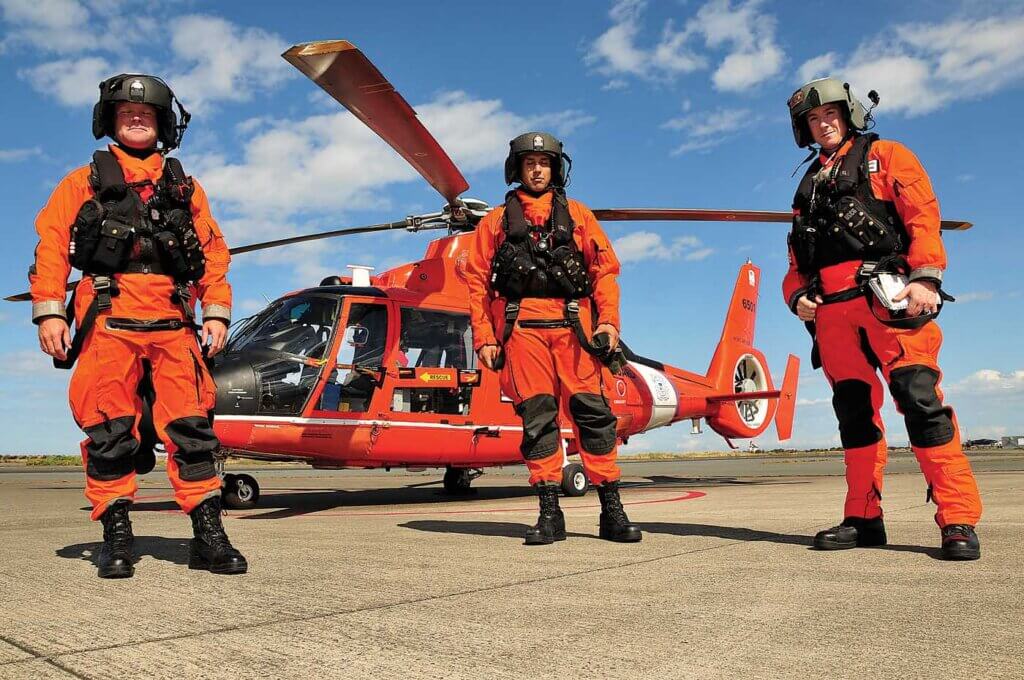
People sometimes imagine a Coast Guard search as a boat slowly cruising around looking for someone.
The reality can be dramatically different.
In February 2026, Coast Guard crews searched for two reported missing surfers near the Santa Cruz Lighthouse in California. A Station Monterey boat crew, an Air Station San Francisco aircrew, and the Coast Guard Cutter Alder participated in the response. Partner agencies also assisted. (US Coast Guard News)
The search ultimately covered more than 90 miles over 10.5 combined hours before being suspended.
That kind of operation requires careful coordination between aircraft, boats, command centers, local responders, and search-and-rescue specialists.
And perhaps the hardest part?
Sometimes crews have to make the difficult decision to suspend a search.
The Human Side of Search and Rescue
The equipment is impressive.
A Coast Guard MH-60 helicopter is impressive.
A 47-foot motor lifeboat charging through rough water is impressive.
But behind every piece of equipment are people.
The Coast Guard’s search-and-rescue mission depends on watchstanders recognizing emergencies, mission coordinators organizing responses, boat crews navigating dangerous waters, aircrews searching from above, rescue swimmers entering hazardous conditions, and support personnel keeping the operation functioning.
These are not theoretical responsibilities.
They are real people responding to real emergencies.
And sometimes they are searching for people they may never find.
Why Training Matters
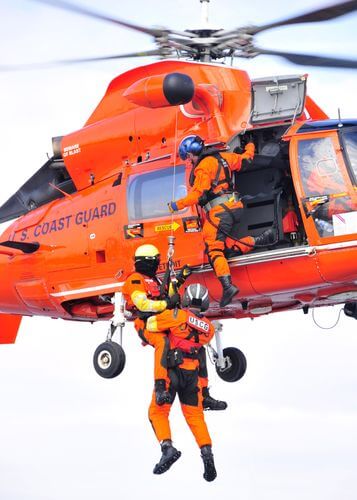
Dangerous West Coast Coast Guard SAR missions demonstrate why specialized training is so important.
Crews must understand navigation, weather, communications, emergency medicine, boat handling, aviation procedures, rescue equipment, and survival techniques.
At locations such as Cape Disappointment, the environment itself becomes part of the challenge.
The Coast Guard doesn’t get to choose calm water simply because the rescue would be easier.
If somebody is in trouble, the mission may happen in darkness, cold water, heavy surf, strong winds, or dangerous currents.
That’s why the Coast Guard motto Semper Paratus—Always Ready fits so well.
Coast Guard Rescue Swimmers: Into the Water

Few Coast Guard specialties are more recognizable than the Aviation Survival Technician, commonly known as the Coast Guard rescue swimmer.
Rescue swimmers train for physically demanding missions where entering the water may be necessary to reach someone in distress.
Born Ready Apparel even carries Coast Guard apparel specifically celebrating this mission, including an AST Rescue Swimmer Coast Guard Veteran Custom Men’s Shirt and a Search and Rescue CG Rescue Swimmer Coast Guard Veteran Custom Men’s Shirt.
Shop Coast Guard Search & Rescue Apparel
For Coast Guard veterans and families, these designs represent much more than a cool graphic.
They represent a mission.
Remembering the Mission With a Challenge Coin
Military challenge coins have become a popular way to commemorate service, qualifications, units, deployments, and important milestones.
Born Ready Apparel offers a large collection of USCG challenge coins, including specialty and custom engraved designs.
Shop Coast Guard Challenge Coins
For a Coast Guard rescue swimmer, boat crew member, veteran, or family member, a challenge coin can serve as a tangible reminder of the people and missions behind the uniform.
Coast Guard Gear Beyond Coins and Shirts
Born Ready Apparel also carries Coast Guard gifts and accessories, including decals, morale patches, mugs, signs, steins, and other collectibles.
Explore Coast Guard Gifts & Accessories
The company also offers custom Coast Guard products for units, teams, classes, and organizations.
Explore America’s Military Heritage
The Coast Guard is one part of a much larger American military tradition. Readers interested in other branches can also explore:
Military Outfitters — Military apparel, challenge coins, collectibles, and gifts.
Vision Strike Coin — Military challenge coins and service-inspired collectibles.
Navy Crow — U.S. Navy apparel, challenge coins, accessories, and Navy heritage products.
Always Ready
The most important lesson from dangerous West Coast Coast Guard search and rescue operations isn’t how dramatic the waves look.
It’s preparation.
The Pacific doesn’t care whether you’re having a relaxing afternoon.
Weather changes.
Boats break down.
Swimmers get caught in currents.
Surfers disappear beyond the breakers.
And when someone needs help, Coast Guard crews answer.
They launch boats.
Scramble aircraft.
Coordinate with local agencies.
Search through darkness and cold water.
And keep going until the mission is complete!
For the men and women of the United States Coast Guard, that’s what Semper Paratus means.